September 17, 2026 | Munich, Germany

Embracing Benjamin Graham’s Legacy
The mission of the Conference is to pay tribute to the pioneering work of Benjamin Graham by upholding the timeless principles of value investing. We are committed to empowering participants with insights into the diverse methods employed by practitioners and to nurture academic research and study in the area of value investing.

Learning and Networking Opportunities
No matter if you’re an individual investor, a seasoned professional, or an executive in the investment management or financial services industries, our Conference provides a platform to explore, discuss, and deliberate on the principles, practices, and diverse applications of value investing on a global scale. It’s a unique opportunity to engage and connect with experts and enthusiasts alike, sharing knowledge and experiences.

Value Investing in a Global Context
We believe in value investing as a universal concept. As we gather in Munich, investors from around the world will unite to explore its vast potential and discuss how it resonates across different markets and cultures.

Secure your attendance and manage your trip details below.

Conference Registration
Seminar Registration

Greek centre/ivey school
Thanks to the generous support of Eurobank S.A. and Eurolife FFH, both Fairfax Financial Holdings Companies, the Greek Centre for Value Investing was established in 2019 with the goal of spreading the word of value investing to academics and the public in Greece. The Greek Centre for Value Investing has also licensed Ivey’s “Ben Graham Centre for Value Investing” brand name and established a European Chapter of Ivey’s Centre to focus on the same goals as the Greek Centre but at the European level.

MAAT investment group
Value Investor. Research paired with disciplined capital allocation.


We are proud to align our event with the Baader Investment Conference, creating a week of synergy for the European financial community. Attendees of our event receive reciprocal benefits at the Baader Bank Munich sessions. Please contact conference@baaderbank.de with the subject line “Value Investing Conference” to receive further details.

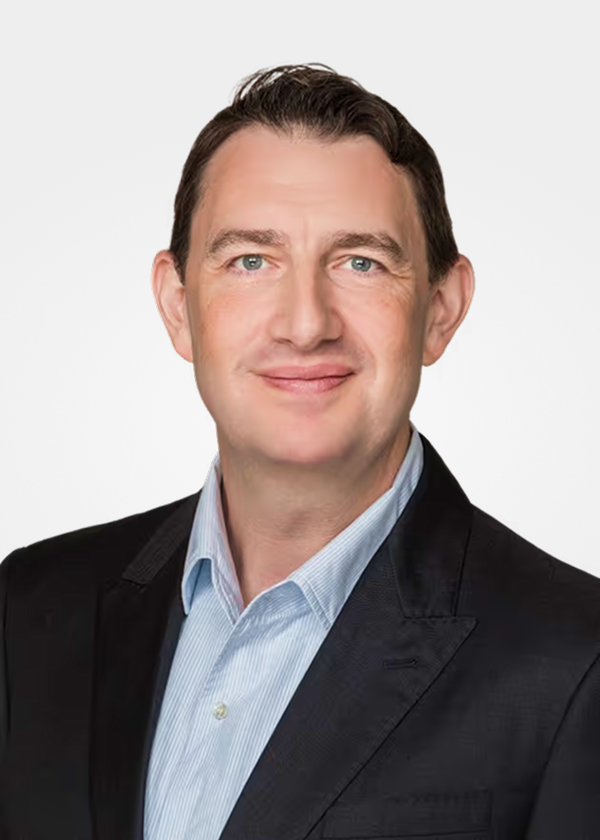

George Athanassakos
Founder & MD, Ben Graham Centre for Value Investing
I am a firm believer in stock picking. I think stock picking with the right process and the right temperament works. Moreover, I believe that portfolio managers do poorly not because they lack stock-picking abilities, but rather because institutional factors force them to over-diversify.
My views conflict with those of other academics who believe that markets are efficient—namely, that stock prices reflect all available information correctly and that value and price are always the same. Naturally, if this is the case, stock picking does not work. But are markets efficient? Some finance academics—and virtually all psychology academics—disagree.
A key requirement for market efficiency is that investors are rational. That is, they are dispassionate calculating machines who gather all information, analyze it, and make the correct decision. But psychologists such as Nobel Prize winner Daniel Kahneman beg to differ. They argue that theories assuming humans are rational should be treated with skepticism. Humans are more anxious, irrational, and unpredictable than market efficiency advocates assume.
Kahneman demonstrated that humans are not symmetric in their decision-making. They tend to become risk-averse when they win and risk-seeking when they lose. Others have shown that humans naively extrapolate past performance, are over-optimistic about their abilities, and tend to herd.
Moreover, market efficiency assumes that higher risk leads to higher returns. However, research by finance academics has shown that over the past 50 years, lower-risk stocks have outperformed higher-risk stocks. Market efficiency struggles to reconcile this, yet many academics continue to defend it.
It is hard not to quote Charlie Munger here. Following a Q&A session after the 2017 Daily Journal annual meeting, he said:
“Warren and I have had some effect on investing and thinking, but they are still teaching the Efficient Market Theory at business schools. The old ideas die hard. [Business professors] think that market efficiency is inevitable like physics. Now what kind of nut would want to make stock markets like physics? It ain’t like physics.”
Additional evidence against market efficiency has emerged in recent years, supporting the view that stock picking may work. Academic studies using aggregated data show that funds investing in concentrated portfolios and/or deviating significantly from benchmarks tend to outperform—if not every year, then on average in the long run. These studies also show that prices do not always reflect the most recent accounting statements, suggesting that investors can earn risk-adjusted returns through fundamental analysis and by taking advantage of market inefficiencies.
While earlier studies suggested that stock picking might work indirectly, there had been limited direct academic evidence. That changed at the end of 2024, when two French researchers from ESSEC Business School published a paper demonstrating that mutual fund managers collectively possess stock-picking abilities that outperform passive benchmarks and consensus-based analyst strategies.
Furthermore, they found that investors can learn from and profit by analyzing professional portfolio managers’ historical holdings using machine learning models. If portfolio managers’ performance were driven purely by luck, such strategies would not consistently outperform the market.
This direct academic evidence supports data compiled by Scott Reardon of Dakota Value Funds, showing that more than 50 high-profile value investors have outperformed their benchmarks and/or markets before and after fees over their lifetimes—or during their active management careers. These include John Maynard Keynes (over 24 years), Prem Watsa (over 30 years), Walter Schloss (over 49 years), Peter Cundill (over 35 years), Seth Klarman (over 25 years), Howard Marks (over 22 years), and Charlie Munger and Warren Buffett (over 60 years).
The key characteristics shared by these investors are patience, discipline, and a long-term perspective. Their success cannot simply be attributed to luck, as some academics argue while dismissing stock-by-stock analysis in favor of broad diversification. Instead, it is the result of bottom-up analysis and careful due diligence.
I would like to welcome you all to this year’s Conference. Thanks to your support over the past twenty-one years, we have built a successful value investing program offering student apprenticeships through the Ivey Value Fund, as well as annual conferences, stock-picking competitions, and value investing seminars.
I proudly welcome our panel of professional value investors—Mr. Shaun Heelan, Mr. Robert Vinall, Mr. Richard Oldfield, Mr. Daniel Gladiš, Mr. Andrew Hollingworth, and Mr. Frank Fischer—who are a living testament to the principles described above. They will share how they apply these ideas in practice within their own portfolios in a global setting.
I am also delighted to welcome our keynote speaker, Mr. Thomas Gayner, CEO of Markel Group, who will offer a perspective that differs from what we are typically exposed to in our everyday norms.
Thank you all for joining us. I hope you have an enjoyable and enriching experience at the Conference.

Mr. Gayner is CEO of Markel Group, a family of businesses with specialty insurance at its core. Markel Group aims to be the best home in the world for businesses and their leaders.
At its heart, the company is built to compound capital—patiently, relentlessly, and over decades. That compounding is fueled by market-leading franchises, permanent capital, ample reinvestment opportunities, and a culture rooted in The Markel Style. At Markel Group, great leaders have autonomy to run their businesses and serve their customers how they know best.
Markel Group is listed on the Fortune 500 and is headquartered in Richmond, Virginia, with more than 70 offices in 16 countries.
Tom joined Markel in 1990 to build its public equity portfolio, which now tops $12 billion. In 2005, he helped launch Markel Group’s investment in wholly owned operating businesses outside of insurance. Today, those companies generate over $5 billion in revenue and more than $520 million in operating profit.
He served as Co-CEO beginning in 2016 and became sole CEO in 2023. As the CEO of a diverse financial holding company—where decentralized management and autonomy are guiding principles—Tom likens his role to being a “CEO of CEOs.” He’s not shy about his vision for Markel Group: to become one of the world’s great companies.
Earlier in his career, Tom was a CPA with PricewaterhouseCoopers and a Vice President at Davenport & Company. He serves on the boards of The Coca-Cola Company, Graham Holdings, and Markel Group, and as Chairman Emeritus for Davis Series Mutual Funds.
Tom is a graduate of the University of Virginia and the Lawrenceville School.

Mr. Heelan is Co-Founder and Chief Investment Officer of MAAT Investment Group, a Munich-based investment firm focused on concentrated, value-driven portfolios in European small and mid-cap equities.
He brings over 20 years of global investing experience across public and private markets, having managed capital through multiple cycles, geographies, and asset classes. Shaun began his career at leading global investment banks, including Goldman Sachs and Merrill Lynch, where he developed deep expertise in mortgage trading, credit derivatives, and structured products.
He later served as a portfolio manager at DW Investment Management and BlueCrest Capital Management in New York, building and leading asset-backed and structured credit strategies at scale. He then moved to Paradigm Capital AG, a focused value investing firm in Germany, where he was promoted to partner in two years.
His investment track record spans highly liquid securities to complex, illiquid special situations, with a consistent emphasis on intrinsic value, balance sheet strength, and downside protection. Shaun has successfully navigated major periods of market dislocation, including the Global Financial Crisis and COVID-19, applying disciplined risk management and a cross-asset perspective.
Throughout his career and regardless of product, he has always utilized the core tenets of value investing. Beyond public markets, he has been a board member of several companies in the Nordic area and Spain. He has also led a leveraged buyout in the space and engaged with banks, bond market underwriters, and private credit funds on a subsequent leveraged recapitalization.
At MAAT, Shaun now applies this experience to a high-conviction, research-intensive value investing approach, seeking mispriced, durable European businesses for long-term partners.

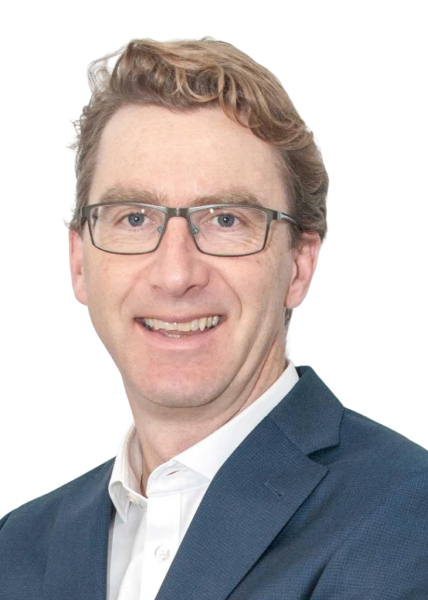
Robert Vinall
Founder & Managing Director, RV Capital
Mr. Vinall is the founder of RV Capital and lives in Zurich, Switzerland, with his wife and three children.
He advises the Business Owner Fund, a long-only fund comprising around 10 equities. There is no sector, country, or size focus. Instead, Rob focuses on companies with owner-oriented managers, growing competitive advantages, and attractive valuations.

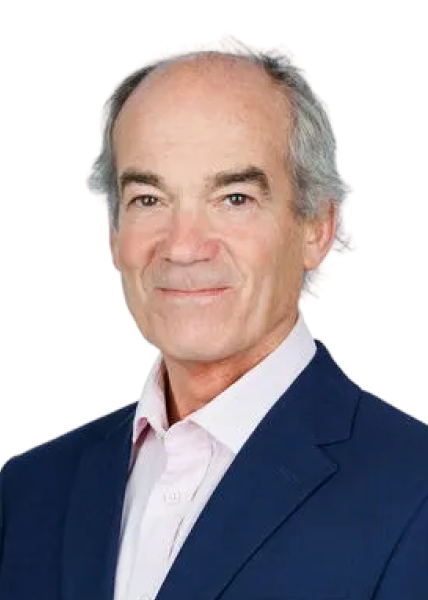
Richard Oldfield
Founder and Chairman, Oldfield Partners
Mr. Oldfield founded Oldfield Partners LLP, a boutique investment management firm, in 2004.
He is Chair of Shepherd Neame Ltd, a trustee of several charities including the Prince’s Trust, the Amber Foundation, and Clore Duffield Foundation, and President of Demelza Hospice Care for Children.
Between 2007 and 2014, he was Chairman of Oxford University Endowment Management Ltd. and a member of the Oxford University Investment Committee.
He is the author of the book Simple But Not Easy, an investing guide originally published in June 2007, with a second edition released in 2021.

Mr. Hollingworth is the Founder of Holland Advisors and Portfolio Manager of the VT Holland Advisors Equity Fund.
He looks for specific factors that he believes drive superior long-term compound growth for equity investors. These include ownership of businesses with strong sustainable competitive advantages run by brilliant, visionary owner-managers. He then looks to invest in such businesses when they are misunderstood by the markets.
Andrew set up Holland Advisors in 2008 after a 20-year career in stockbroking and fund management. He founded and has managed the VT Holland Advisors Equity Fund since its inception in 2011.
He did not attend university and instead started working in the investment industry at the age of 18. He lives and works in Farnham, Surrey, UK. As a sizable investor in his own fund, he eats his own cooking and genuinely enjoys what he does.

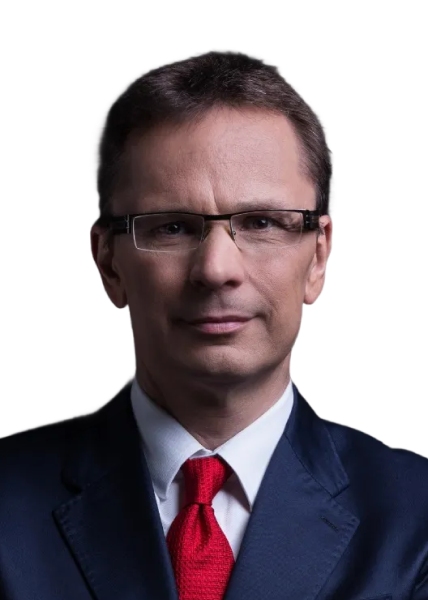
Mr. Gladiš has been an active stock investor since the early 1990s. He continues today as the manager of the Vltava Fund, which he founded in 2004.
Hidden Investment Treasures is his third book. His first two books, Learn to Invest (2004) and Stock Investing (2014), were published in Czech by Grada Publishing.
Gladiš lives in Brno, Czech Republic, and spends his free time with his family, cross-country skiing, studying, and traveling.

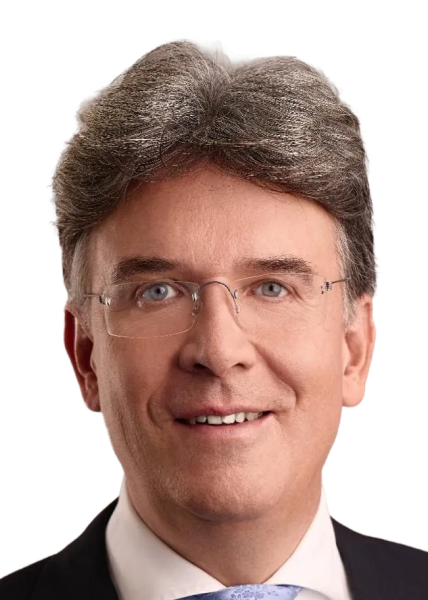
Mr. Fischer, born in 1964, is the CEO of Shareholder Value Management AG, where he also acts as the Chief Investment Officer (CIO).
Frank Fischer was honoured as Fund Manager of the Year in 2018. In addition, he is Chairman of the Supervisory Board of Intershop Communications AG.
From November 2009 to May 2014, he was also a member of the Board of Directors of PULSION Medical Systems SE. Until the end of 2005, Frank Fischer was the Managing Director of Standard & Poor's Fund Services (formerly Micropal GmbH), where he was responsible for investment fund information and ratings.
After completing his apprenticeship as a banker at the Hessische Landesbank, he completed his studies in Business Administration at the University of Frankfurt.
Mr. Fischer is married and has two children. He is the founder and director of the charitable foundation Starke Lunge.

N. David Samra is a managing director of Artisan Partners and founding partner of the International Value Group. He is portfolio manager of the Artisan International Value Strategy, which he has managed since the portfolio’s inception in July 2002. Mr. Samra also was co-portfolio manager for the Artisan Global Value Strategy from its inception in July 2007 through September 2018. Mr. Samra has been nominated six times (in 2008, consecutively from 2011-2014, and in 2016) for the Morningstar International-Stock Fund Manager of the Year Award and won the award in 2008 and 2013. He was also named EAFE Equity Investment Manager of the Year in 2015 and 2016 by Institutional Investor. Investor’s Business Daily has recognized the Artisan International Value Fund four times (consecutively from 2021-2024) as one of the best international stock mutual funds for outperforming the MSCI EAFE index over the last one-, three-, five- and ten-year periods. U.S. Lipper Fund Awards has recognized Artisan International Value (APHKX) with 13 awards since 2013, including naming it the best fund in Lipper's International Large-Cap Value Fund category over the three-, five- and ten-year time periods in 2023, 2024 and 2025. In 2024, Value Invest awarded Mr. Samra with the Fund Manager Lifetime Achievement Award in recognition of his accomplishments in the field. In 2025, Mr. Samra was nominated for the Morningstar Award for Investing Excellence: Outstanding US Equity Portfolio Manager.
Prior to joining Artisan Partners in May 2002, Mr. Samra was a portfolio manager and a senior analyst in international equities at Harris Associates LP from August 1997 through May 2002. Earlier in his career, he was a portfolio manager with Montgomery Asset Management, Global Equities Division.
Mr. Samra holds a bachelor’s degree in finance from Bentley College and a master’s degree in business administration from Columbia Business School.

Mr. Brenton is the CEO and a co-founder of Turtle Creek Asset Management, a Toronto-based independent investment management firm that invests in publically listed equities. Turtle Creek is focused on long term capital growth for a clientele of high net worth individuals, families and institutions and has an exceptional 15 year investment track record. Previously, Mr. Brenton founded and was the CEO of the private equity subsidiary of The Bank of Nova Scotia where he invested $300 million in control positions of a dozen Canadian mid-market private companies. In the early 1990's, Mr. Brenton was head of the high technology investment banking practice of Scotia Capital and prior to that, he was a founding member and Managing Director in the firm’s mergers and acquisitions practice. Mr. Brenton joined McLeod Young Weir (the predecessor to Scotia Capital) in 1984. Mr. Brenton received his MBA from the Richard Ivey School of Business (University of Western Ontario) in 1984 and his B.Sc. from Mount Allison University in 1980.