I had lunch with a respected journalist last week. We talked about the industry, about Bavaria, about how hard it is to make value investing sound exciting next to the hot quant funds and the crypto bros.
I said what I always say: it isn't sexy. It was never going to be.
He thought for a moment and said: "You guys are like the Cinderella Man of investing."
I was speechless, because he was RIGHT ON.
If you don't know the film…. James Braddock, a fighter the establishment had quietly written off. Broke, working the docks with a busted hand. And then he came back. Not by becoming flashier, but because when the moment came he could still do the one thing he'd always been able to do, and he knew exactly why he was doing it, which is, much like us: To put food on the table for his family.
It made me think of something I'd written earlier, after reading the FT's profile of Chris Hohn. The piece spent its whole length trying to explain him: the intensity, the focus, the discomfort with doing what everyone else does. Reading it, I was struck by how often our industry frames that kind of investor as a puzzle. "Brilliant but difficult." "Singular." "Not built like everyone else."
I find myself reading it the other way round. The traits we so often try to measure, manage and moderate may be the very ones that, in the end, turn out to be the edge. (To be clear, that's my own reflection on how the industry treats difference — not a comment on any individual.)
The deviation is the point. The outlier is the edge.
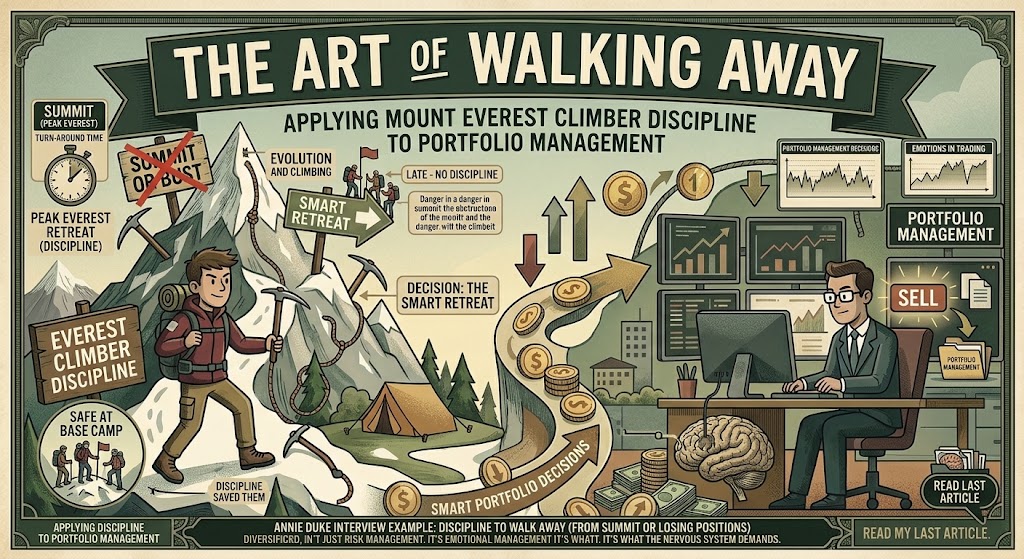
And I think this is where the discipline gets misunderstood. I've written before that concentration isn't really a portfolio decision but a psychological one. The human brain isn't wired for it; it's wired for survival. Loss aversion kept our ancestors alive, and we still drag that ancient calculus into the portfolio, where the pain of a loss lands about twice as hard as the pleasure of an equal gain. To concentrate is to override that wiring on purpose: to feel the upside as vividly as the brain automatically feels the downside. That isn't natural. It's a conscious choice. Backed by conviction, by temperament, and by a SOUND process (more of that on my next article coming out on Monday).
That's Braddock. Not a man who got better at being fashionable, but one who was never wired for the easy thing in the first place. A man who was made, not broken, by the years that no one was watching.
The unfashionable stretch isn't the dead time. It's working the docks as a stevedore with a busted hand. It's where the work actually gets done, and where the temperament that overrides the wiring is quietly built.
Value. Recoded.
So I keep coming back to the question my friend left me with, even if he didn't mean to:
If the whole industry is built to reward conformity — and our own wiring quietly reinforces it — what does it say about the people who don't conform?
How many of them are we still mistaking for a problem to be managed?
--Jenny Ngan , Head of Business Development
This post is provided for general information and educational purposes only. It reflects the personal views of the author and does not necessarily represent the views of MAAT Investment Group. It is not investment advice, nor an offer, solicitation, or recommendation to buy or sell any security or to invest in any fund or strategy. Any companies or transactions mentioned are referenced solely to illustrate a general point and are not recommendations. Past performance is not a reliable indicator of future results, and the value of investments can fall as well as rise. Capital is at risk. Please seek advice from a suitably qualified professional before making any investment decision.